Hornbills, trees and people
Hornbills, trees and people
Safeguarding the Eastern Himalaya's biodiversity, this program combines long-term research with community-led action. By protecting hornbill nests, restoring native forests, and empowering indigenous youth, scientific data has been transformed into scalable conservation models.



- (i) Environment Sustainability
- (ii) Livelihood Enhancement
- (iii) Rural Development
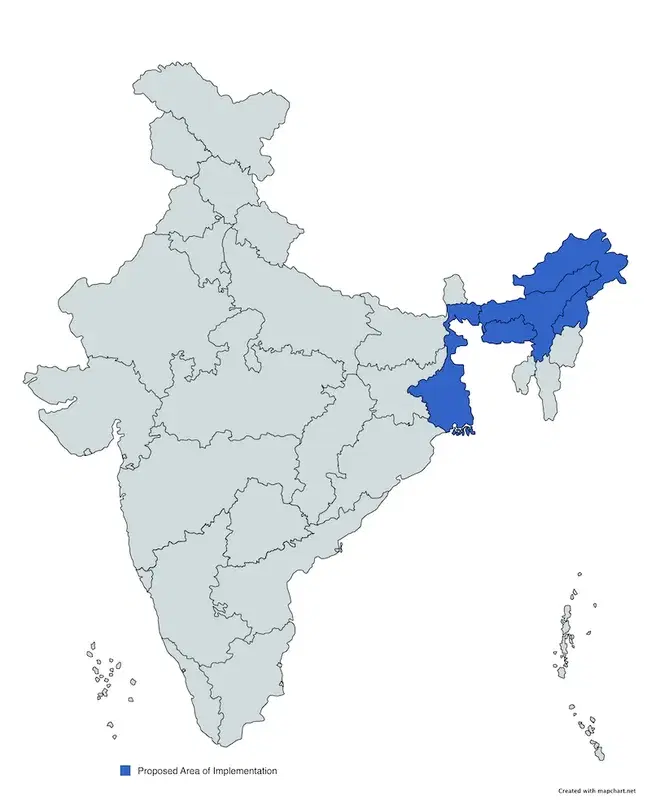
Arunachal Pradesh, Assam, Meghalaya, Nagaland, West Bengal
Open for funding
Existing Project
Executive summary
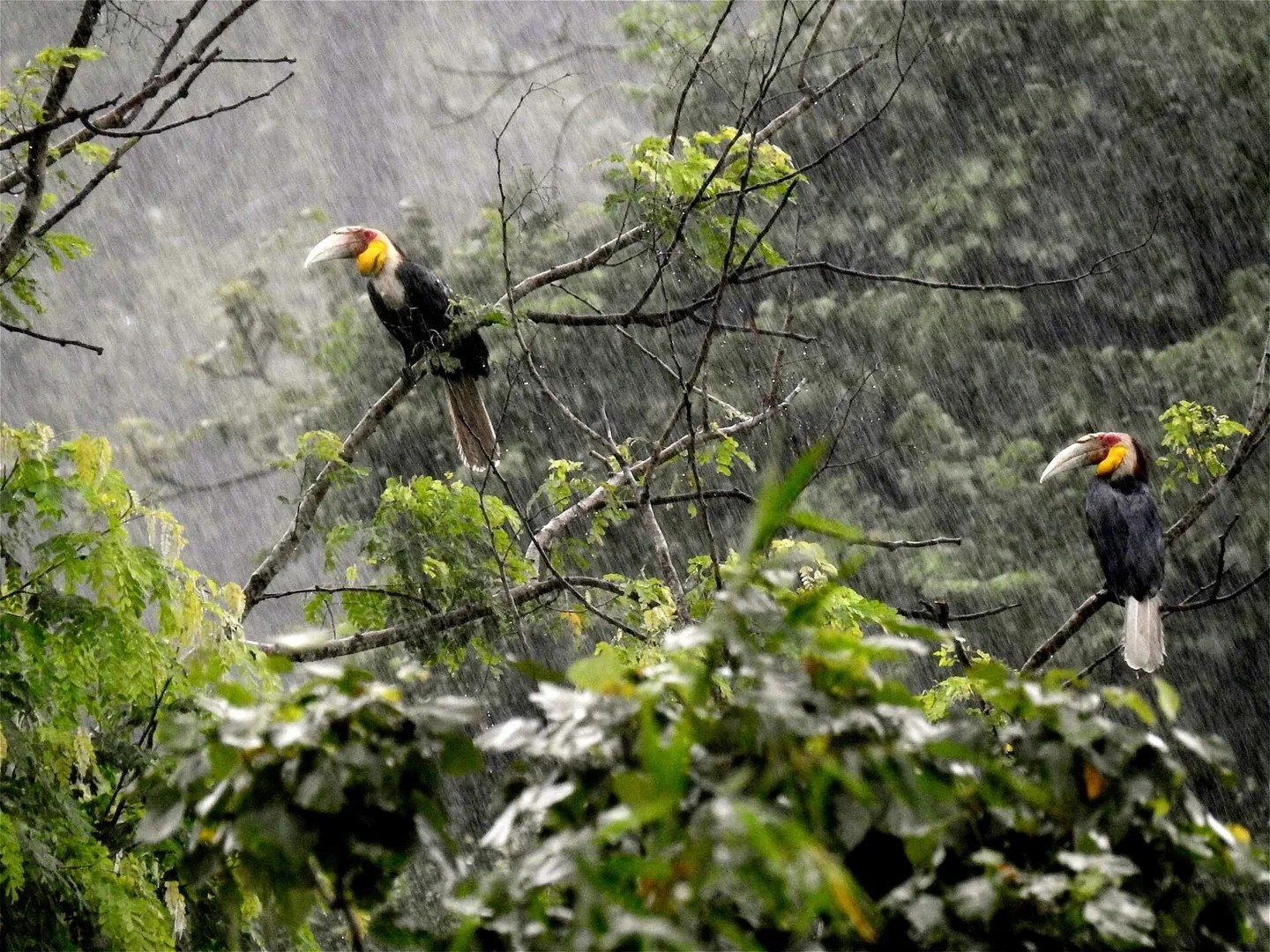
The Eastern Himalayan region of India is a critical global biodiversity hotspot facing acute threats from habitat loss, illegal logging, and climate change. Over the past 22 years, the interdisciplinary program has addressed these challenges through long-term ecological research and community-centric conservation. Centered on the hornbill as a flagship species, our work spans Arunachal Pradesh, Nagaland, Assam, and West Bengal, bridging the gap between scientific data and on-ground indigenous stewardship.
Proven Impact and Successes: The evidence-based interventions have established some of the longest-running conservation models in the region:
-
Species Protection: Approximately 115 nests are monitored annually. The Hornbill Nest Adoption Program (HNAP) has protected 42 nests outside protected areas, resulting in 238 successfully fledged chicks since 2012.
-
Community Governance: Over 22 indigenous community members have been employed as nest protectors and conservationists, fostering local leadership.
-
Habitat Restoration: 80,000 saplings of 135 native tree species have been raised, restoring 22 hectares of degraded forest.
-
Education & Capacity Building: 3,000 children have been engaged in nature education and over 210 forest officials, educators, and practitioners have been trained in restoration science.
Strategic Vision and Proposed Action Building on this foundation, we propose to scale our impact through three core pillars:
-
Collaborative Conservation: Integrating the HNAP into government frameworks and co-developing a region-specific Hornbill Action Plan based on IUCN standards.
-
Ecological Restoration & Training: Establishing a learning center to mainstream science-backed restoration, with a target of growing 200 native species and supporting youth-led conservation start-ups.
-
Research & Knowledge Dissemination: Consolidating two decades of data into accessible resources, including a tree identification app, restoration manuals, and high-quality scientific publications to guide regional policy.
Expected Outcomes Over the next three years, we aim to establish community-led conservation models in 2-3 new sites, support 10 indigenous youth groups in local leadership, and expand the regional restoration network. By converting long-term research into actionable capacity, we seek to ensure the resilience of the Eastern Himalaya’s unique biological and cultural heritage.
About the NGO
The Nature Conservation Foundation (NCF) was established in 1996 as a public charitable trust. At NCF, their goal is to contribute to the knowledge and conservation of India’s unique wildlife heritage with innovative research and imaginative solutions. NCF works in a range of wildlife habitats—from coral reefs and tropical rainforests to the high mountains of the Himalaya. Here, they strive to understand the survival needs of endangered species such as snow leopards and elephants, as well as equally fascinating but lesser-known wildlife such as corals and spiders. Their research also addresses human resource-use and its impacts on wild species and ecosystems. Using this knowledge of wildlife ecology and human society, they design conservation strategies that are locally appropriate. These are implemented in collaboration with local communities who depend the most on natural resources, and the governments that manage them. While promoting wildlife conservation, our programmes also strive to safeguard livelihood and development options for local communities.