Restoring Natural Habitat in Western Ghats
Restoring Natural Habitat in Western Ghats
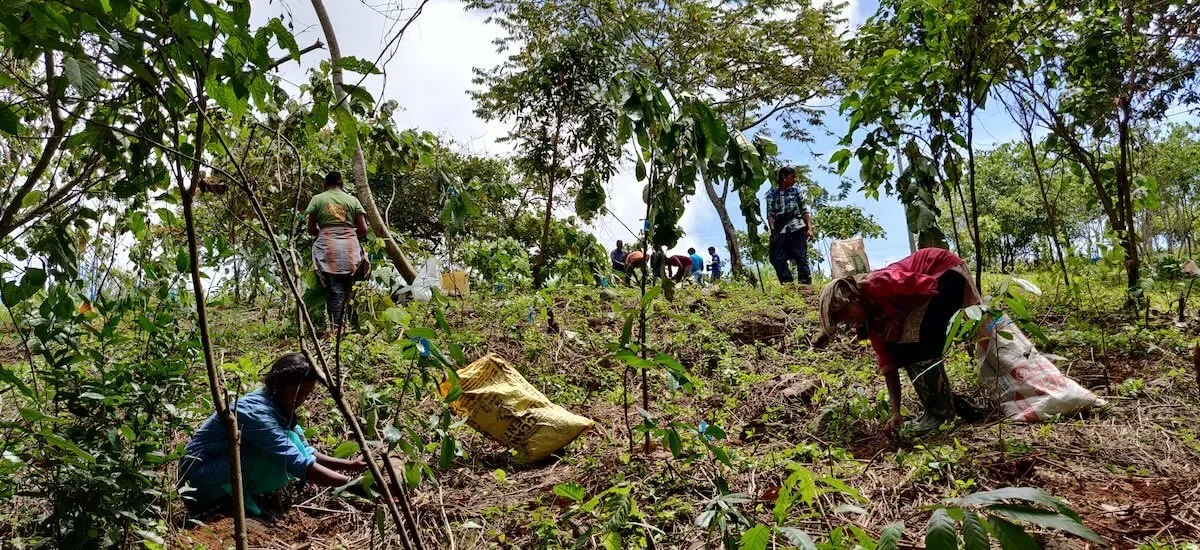
The Nature Conservation Foundation (NCF) is driving ecological restoration in the Western Ghats, focusing on rehabilitating degraded forests and promoting planting of native evergreen tree species.




- (i) Environmental Sustainability
- (ii) Ecological Balance
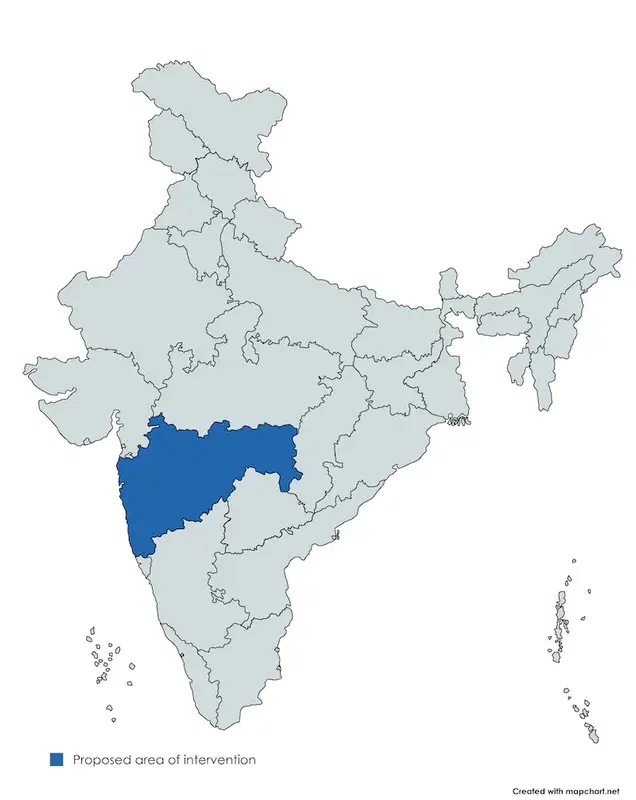
Maharashtra
Open for funding
Existing Project
Executive summary
Despite their ecological importance, most evergreen species in the Western Ghats are rare, and a substantial proportion of their suitable habitats lie outside the formal Protected Area network, posing a risk to their persistence in the long term. The primary forests where these trees often occur are increasingly threatened by widespread conversion to monoculture plantations, such as cashew, tea, rubber, as well as by ongoing degradation from invasive species, extraction and clear-felling.
Most evergreen tree species in the Western Ghats are rare, and much of their suitable habitat falls outside protected areas, putting them at long-term risk. Their primary forest habitats face growing threats from conversion into monoculture plantations like cashew, tea, and rubber, as well as from degradation caused by invasive species, resource extraction, and clear-felling. Many ongoing restoration initiatives in the region tend to emphasize economically valuable or limited native species, prioritizing short-term human and carbon benefits over ecological integrity. Such efforts, while beneficial in some respects, fail to adequately conserve native biodiversity or enable full forest ecosystem recovery.
In contrast, ecological restoration that focuses on planting a rich diversity of native species can rebuild structurally and functionally complex forests. This approach helps restore ecological interactions, enhances biodiversity, and strengthens climate resilience. Additionally, several native species hold cultural and livelihood significance offering resources such as wild nutmeg and dammar resin that can provide sustainable benefits to local communities while simultaneously promoting long-term conservation goals.
Despite growing interest, such high-diversity restoration efforts remain rare. A key bottleneck is the limited availability of native evergreen saplings, especially in sufficient diversity and quantity to match the complexity of the original forests. Overcoming this challenge is essential to scale meaningful restoration across degraded forest patches and monoculture-dominated landscapes in the Western Ghats.
This initiative aims to:
- Restore 15 hectares of degraded forest annually by planting over 200 species of native evergreen trees.
- Conduct enrichment planting of rare, endangered, and threatened (RET) species in regenerating but species-poor forest patches.
- Increase the availability of native saplings by supplying at least 5,000 saplings and/or 50,000 seeds annually to private nurseries at subsidised costs.
- Strengthen local capacity for ecological restoration by training at least 20 individuals each year in restoration science and practice.
- Support livelihoods and local stewardship by involving community members
- Expand the PlantWise tool to cover all of peninsular India, enabling site-specific, ecologically relevant species selection for restoration practitioners.
This approach aims to include nearly one-third of the evergreen tree diversity found in the Western Ghats in our restoration efforts. Planting a wide array of native species will enable the development of structurally and functionally complex forests, supporting biodiversity conservation and long-term ecosystem resilience.
About the NGO
The Nature Conservation Foundation (NCF) has been at the forefront of rainforest restoration in India for over 25 years. What began as a pioneering effort in the Anamalai Hills of Tamil Nadu has since evolved into a multi-site, science-driven restoration programme spanning four ecologically important landscapes across the Western Ghats and the Eastern Himalaya.
Over the past two decades, we have planted more than 100,000 native evergreen tree saplings, with an average 60% survival rate two years after planting, a typical success rate for tropical forest restoration. Our work focuses not just on tree planting, but on restoring entire ecosystems, using diverse native species and grounding our efforts in ecological science and long-term monitoring. Our model emphasises local community involvement, capacity building, and partnerships with landowners. To learn more about the impact of our work, please watch A Dream of Trees, a short documentary capturing our restoration journey in the Anamalai Hills.